
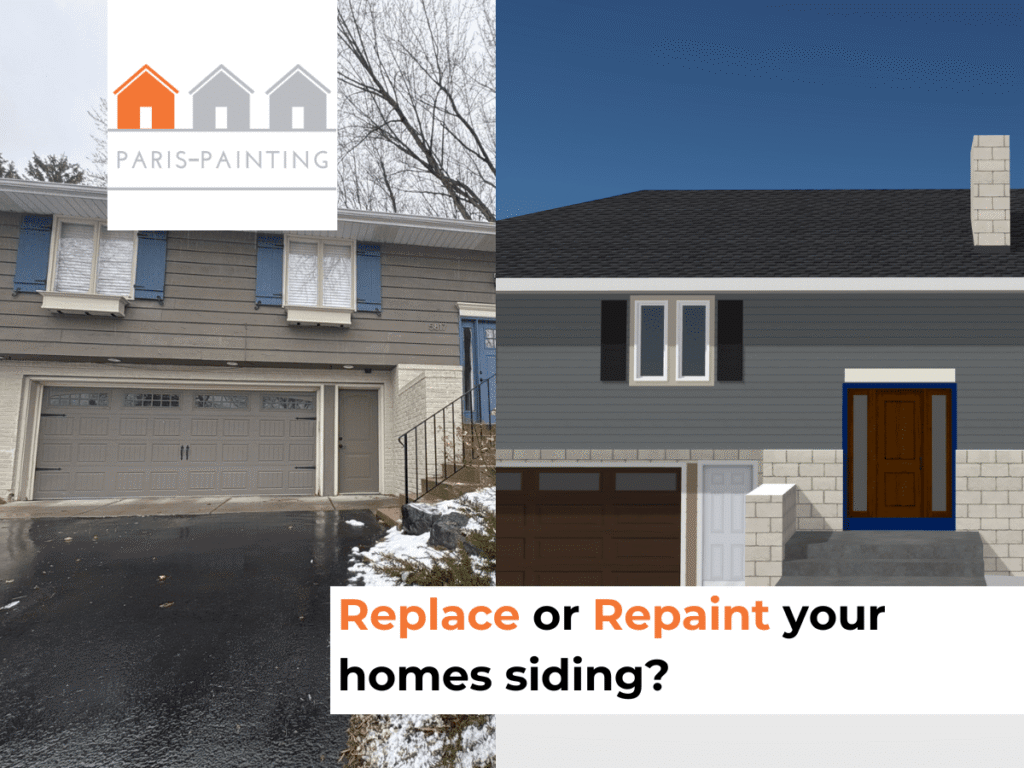
When it comes to enhancing the exterior of your house, you often find yourself at a crossroads: should you opt for painting your existing siding or invest in a full replacement? This decision is important, as it affects not only the aesthetic appeal of your home but also its long-term durability and energy efficiency.
Painting and replacing siding are two distinct options, each with its own set of pros and cons. Painting your siding can offer a quick and cost-effective way to refresh your home’s look, but it may not address underlying issues.
On the other hand, replacing your siding, whether it’s vinyl, wood, or fiber cement, provides a more durable and beneficial investment, but it comes with a higher upfront cost. In this article, we will delve into the factors you need to consider to make an informed decision that suits your needs and budget.
Assessing the Condition of Your Siding

Visible Damage and Wear
When evaluating whether to paint or replace your siding, the first step is to conduct a thorough visual inspection. Look for signs of visible damage and wear. Check for cracks, gaps, or holes in the siding, which can indicate water intrusion or pest infestation.
Also, inspect for warping, buckling, or sagging, as these can be signs of structural issues or material failure. For vinyl siding, check for fading, discoloration, or brittleness, which can signal that the material is nearing the end of its lifespan. For wood siding, look for rot, mold, or mildew, which can compromise the integrity of the material.
Any signs of peeling paint, flaking, or chalking on painted surfaces should also be noted, as these can indicate underlying issues that painting alone might not resolve.
Age and Expected Lifespan
Understanding the age and expected lifespan of your siding is important in making an informed decision. Different types of siding have varying lifespans.
For example, high-quality vinyl siding can last anywhere from 20 to 40 years, while wood siding typically lasts between 20 to 30 years if properly maintained. Fiber cement siding, such as James Hardie products, can last even longer, often up to 50 years or more.
If your siding is approaching or has exceeded its expected lifespan, it may be more cost-effective and beneficial in the long term to consider replacement rather than repainting. Additionally, even if the siding looks good, its age can be a significant factor in determining whether it is still providing the necessary protection and energy efficiency for your home.
Case Study: Longevity and Cost Consideration
One homeowner’s primary goal was ensuring their home’s exterior would have lasting protection, going beyond the typical 3–5 year paint lifecycle. They explored both siding replacement and repainting, weighing costs against longevity.
Siding Replacement Estimate:
- Siding: $18,940
- Trim: $3,924
- House Wrap: $480
- Permits: $250
- Dumpster: $515
- Total: $26,379
Painting Estimate:
- Lap Siding: $4,866
- Brick & Block Foundation: $2,000
- Window & Door Trim: $1,261
- Entry Doors & Garage Door: $536
- Flower Box & Shutters: $423
- Washing: $385
- Caulking & Prep: $283
- Total: $9,754
While repainting was significantly less expensive upfront, the homeowner had to consider that siding replacement, though initially costlier, offered a far greater lifespan—potentially 30 to 50 years depending on materials selected. This made replacement an attractive long-term investment, particularly when considering ongoing maintenance costs associated with repainting every few years.
Benefits of Repainting Siding

Affordability and Quick Facelift
One of the most significant advantages of repainting your siding is its affordability. Compared to replacing your siding entirely, painting can save you 50 to 60 percent of the costs involved.
This makes it an attractive option for homeowners who are on a budget or who need a quick aesthetic update. Painting your siding can also provide a rapid transformation, enhancing the curb appeal of your home almost immediately.
This is particularly beneficial if you are preparing your home for sale or want to refresh its look for an upcoming event. The process of painting is generally much faster than a full siding replacement, often taking just a few days to complete.
Extended Lifespan
Repainting your siding not only improves its appearance but also extends its lifespan. A fresh coat of paint acts as an additional layer of protection against the elements, such as UV rays, rain, and wind. This protective layer helps shield the underlying material from further damage, effectively adding 5 to 10 years to the life of your siding.
For homeowners whose siding is still in good structural condition but showing signs of surface wear, painting can be a practical way to preserve the integrity of the material and delay the need for replacement.
When Replacement is the Best Option
Enhanced Durability and Longevity
Replacing your siding is often the best option when you prioritize enhanced durability and longevity. Modern siding materials, such as fiber cement, vinyl, and metal, are engineered to withstand harsh weather conditions and last for decades with minimal maintenance.
Fiber cement siding, for example, is known for its resistance to fire, pests, and moisture, making it a robust choice that can outlast other materials. Vinyl siding, while less expensive, still offers significant durability and can last between 20 to 40 years, depending on the quality and maintenance.
Metal siding, with its exceptional durability and low maintenance requirements, can last 50 years or more, providing a long-term solution to your home’s exterior needs.
Increased Home Value and Energy Efficiency
Replacing your siding can also significantly boost your home’s value and energy efficiency. Updated siding is a major selling point for prospective buyers, as it indicates a well-maintained and attractive property. Research shows that new siding can substantially raise a home’s resale value, providing a return on investment.
Additionally, modern siding materials are designed with energy efficiency in mind. Insulated siding, for instance, improves thermal performance by reducing heat loss and air leakage, helping to keep your home cool in the summer and warm in the winter.
This not only enhances your home’s comfort but also lowers your utility expenses over time.
Conclusion
Deciding between painting and replacing your siding involves carefully assessing the condition, age, and type of your current siding, as well as your long-term goals and budget. Painting provides an immediate, cost-effective aesthetic enhancement but may not adequately resolve deeper structural or insulation issues. Conversely, siding replacement offers extensive durability, improved energy efficiency, and increased property value, representing a significant long-term investment.
Whether you need painting or siding replacement for your home or business, Paris Painting and Paris Home Exteriors can provide expert guidance and comprehensive services—including exterior painting, carpentry repairs, and full siding replacements. Let us help you make the best choice for your property to ensure lasting protection, exceptional appearance, and enhanced value.
FAQ
What are the potential warranty implications if I decide to paint my vinyl siding?
Painting your vinyl siding can void the manufacturer’s warranty, even if the siding is new. Most major manufacturers do not honor warranties for painted vinyl siding. Additionally, insurance claims may be denied if the vinyl has been painted.
What is Hover and how does it help with siding replacement decisions?
Hover is a powerful design and measurement tool we use during the siding replacement process. Homeowners or contractors upload roughly 8 photos of the home, and within about 24 hours, Hover generates a 3D model of the home’s exterior. This model allows homeowners to visualize multiple siding and trim combinations to find their perfect design. In this case study, the Hover model had been created, indicating that the homeowner was potentially leaning toward siding replacement as the long-term solution.
How often will I need to repaint my siding compared to the lifespan of new siding?
The frequency of repainting siding varies by material:
- Wood siding: every 3-7 years.
- Aluminum siding: every 5-6 years.
- Stucco: every 5-6 years.
- Cement fiberboard siding: every 10-15 years. New siding materials like cement fiberboard generally require less frequent repainting compared to traditional materials like wood or aluminum.
What are the risks of using a power washer to prepare vinyl siding for painting?
Using a power washer on vinyl siding for painting preparation carries several risks, including cracking, shattering, or loosening the siding, especially if it is aged or weakened. High pressure can strip paint, force water beneath the siding leading to mold and mildew, and damage windows and other nearby components. It can also strip the protective sealant, leaving an uneven appearance.
Can all types of siding be painted, and what factors determine compatibility with paint?
Yes, all types of siding can be painted. Compatibility is determined by the type of paint used: acrylic or latex paints are suitable for wood, vinyl, and fiber cement siding; specialized formulas like VinylSafe are needed for vinyl to prevent warping; and oil-based paints are ideal for metal siding.


